
Your team is the integration layer: the hidden cost of re-typing between systems
Order in the webshop, re-typed into the ERP, copied into the delivery note, pasted into the invoice email. Every company has these paths: few have ever counted what they cost, in hours and in errors.
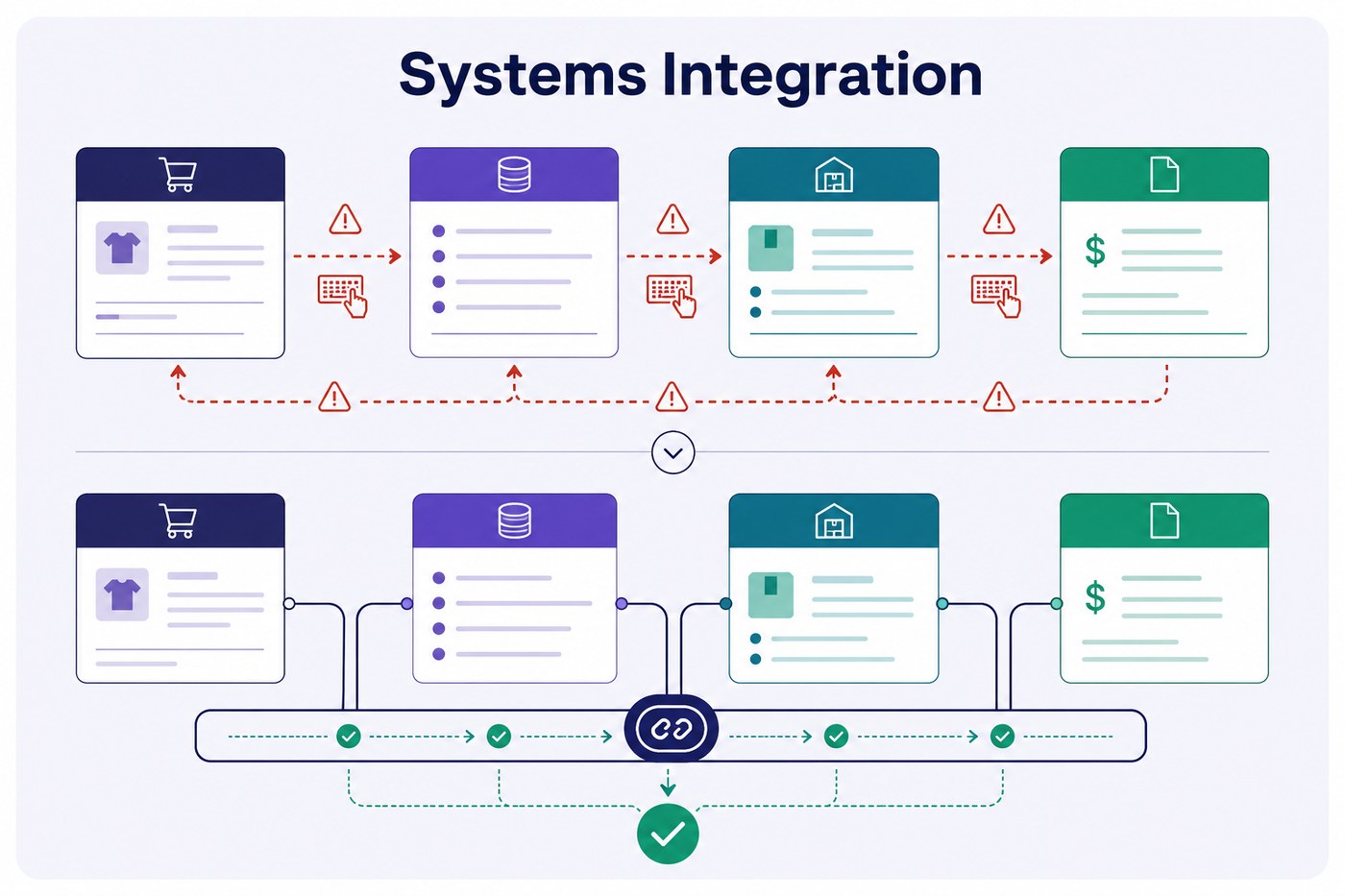
Walk any order through a typical company and count the keyboards it touches. A customer submits it online; someone re-types it into the ERP; the warehouse prints and re-enters it into a delivery system; accounting copies the numbers into an invoice; sales updates a spreadsheet nobody else trusts. The systems never talked, so the staff became the integration layer. That layer is expensive in exactly the ways nobody measures.
What re-typing really costs
Three costs stack. Hours: minutes per document, times documents per day, times working days. Done honestly, this alone often justifies the fix. Errors: every re-type is a chance to transpose digits, and the expensive mistakes (wrong quantity shipped, wrong price invoiced) surface after the customer noticed. Latency: the order placed at 9:00 that enters the ERP at 15:00 makes every downstream report wrong by hours, and month-end close later by days.
Why it stays unfixed
Because it grew gradually, nobody owns it, and each individual hop “only takes a minute”. And because the fix sounds like a scary word, integration, that vendors quote scary numbers for. The reality is smaller: most companies need a handful of well-built connections, not an integration platform.
What the fix looks like
Map the paths first: which document travels, from where to where, re-typed by whom. Rank them by volume times error cost. Then connect the top paths (webshop to ERP, ERP to invoicing, ERP to the dashboard) using the systems’ own interfaces, with two rules that make integrations trustworthy: every transfer is logged where humans can see it, and failures alert someone rather than fail silently. This is exactly the thin-custom-layer pattern: the packaged systems stay; the glue is built to fit.
How to know it worked
The honest metric is boring: how many times per day does a human re-type something a system already knew? Before and after. When that number approaches zero, the invisible integration layer, your staff, goes back to doing the jobs they were hired for, and the reports agree with each other for the first time. Counting your paths takes one workshop; it is the cheapest diagnosis in IT.
What re-typing between systems costs you a year
Every integration business case starts here: the records a human moves from one system to another by hand, and the errors that come with them.
Your own internal cost of an hour of the person doing the re-typing, salary and everything you pay on top of it, divided by the hours they work. It is your number about your staff. It is not a Vega Sky rate and we do not publish one.
AEDIndicative, and built entirely from figures you enter. Every box starts empty. It counts the typing, not the chasing, the reconciliation at month-end, or the meetings that exist because two systems disagree, and it does not price the integration.
Start with a conversation
An initial consultation with a consultant rather than a salesperson, about your IT, security or systems question.