
Cloud vs on-premise in the UAE: a calm guide to a noisy argument
One camp says servers are dead; the other counts cloud invoices and disagrees. The honest answer is per workload, not per ideology: here is the framework, including the residency question UAE companies must ask first.
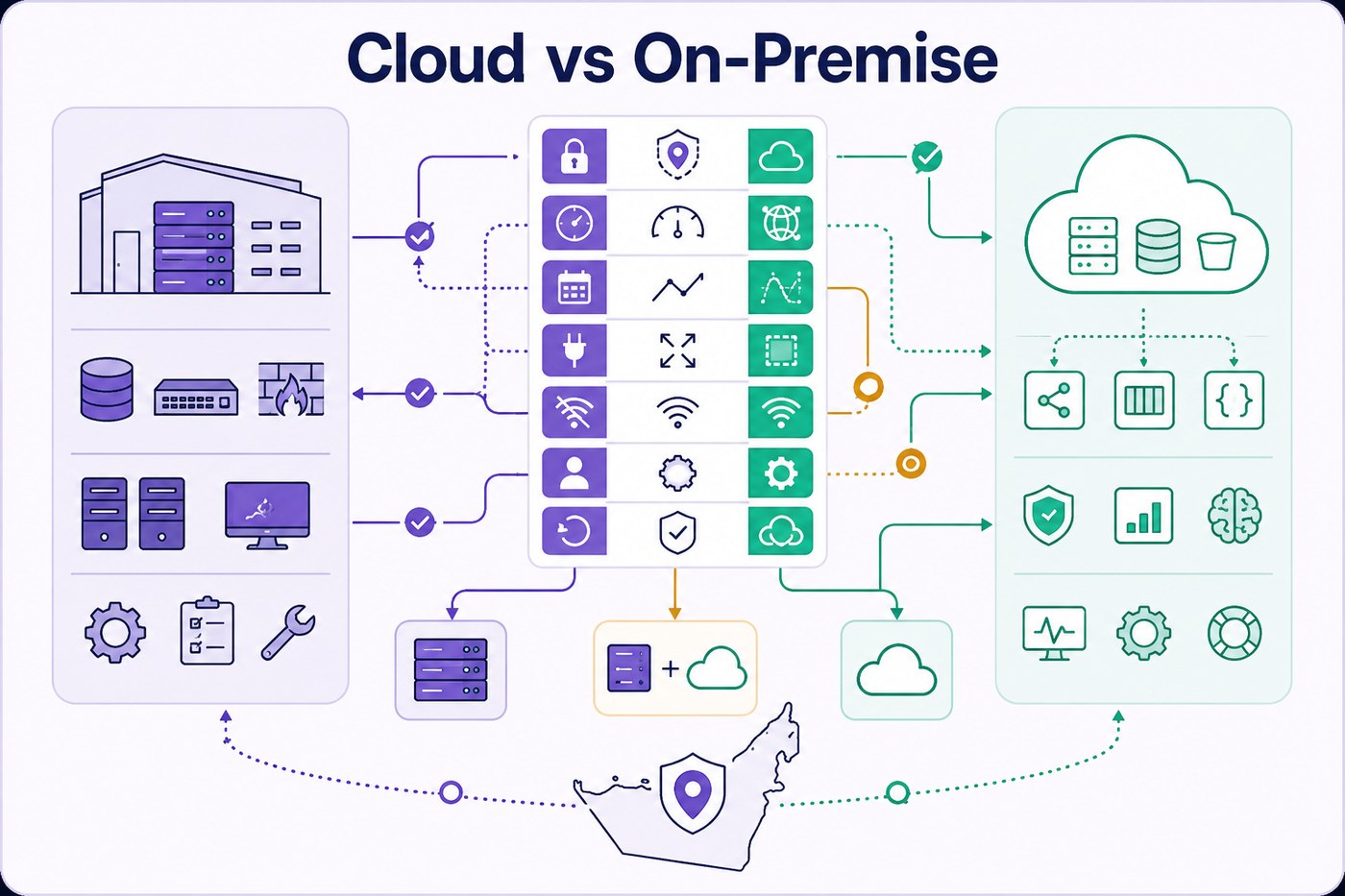
Few IT arguments generate more confident nonsense than cloud versus on-premise. Vendors on both sides have numbers proving their side wins. The boring truth: the right answer differs per workload, and most UAE companies end up, correctly, with a mix.
Ask the residency question first
Before any cost comparison: are you allowed to put this data where this provider stores it? UAE data-protection law, sector regulators and many government contracts constrain where personal and contractual data may live. The major clouds now operate UAE regions, which answers the question for many workloads, but “the app is cloud-based” is not a residency answer; “the data sits in the provider’s UAE region, stated in the contract” is.
Where cloud usually wins
Email and collaboration (running your own mail server in 2026 needs a reason), anything with spiky or unpredictable load, systems that must survive an office disaster, and new applications built cloud-native. You trade capital purchases for monthly costs and someone else patches the plumbing.
Where on-premise still wins
Steady, predictable workloads that run around the clock: the accounting database, the file server, the factory system that must work when the internet does not. Over three to five years, a right-sized server you own is often significantly cheaper than the equivalent cloud bill, and the latency to the machine on the production floor is unbeatable. The catch: it wins only if the server is actually managed. Patched, monitored, backed up. An unmanaged server is not a saving; it is a slow incident.
The bill nobody budgets
Cloud surprises come from egress fees, forgotten test machines running for months, and per-user licences that quietly outgrow the old perpetual ones. On-premise surprises come from the day the hardware ages out and nobody reserved for its replacement. Both are management failures, not platform failures, the platform just decides which failure you get.
A sane path
Inventory your workloads. Email and collaboration: cloud, almost always. New custom software: cloud-first. Steady core systems: compare honestly over five years, residency first. Backups: the other place from where the original lives. Then revisit yearly: the answer moves as prices, regions and your company change. If you want the comparison run on your actual numbers rather than vendor slides, that is precisely what independent consulting is for.
Five years of cloud against five years of on-premise
Five figures, all of them yours, and every box starts empty. The on-premise side includes the refresh you would have to do again inside the five years.
Indicative and deliberately simple. The assumptions: five years of running cost, hardware charged once per refresh cycle within those five years, and every figure in the boxes is one you entered about your own infrastructure. None of them is a Vega Sky price. It compares the hardware and the running cost only, which is why the list above matters before you act on the number.
Start with a conversation
An initial consultation with a consultant rather than a salesperson, about your IT, security or systems question.